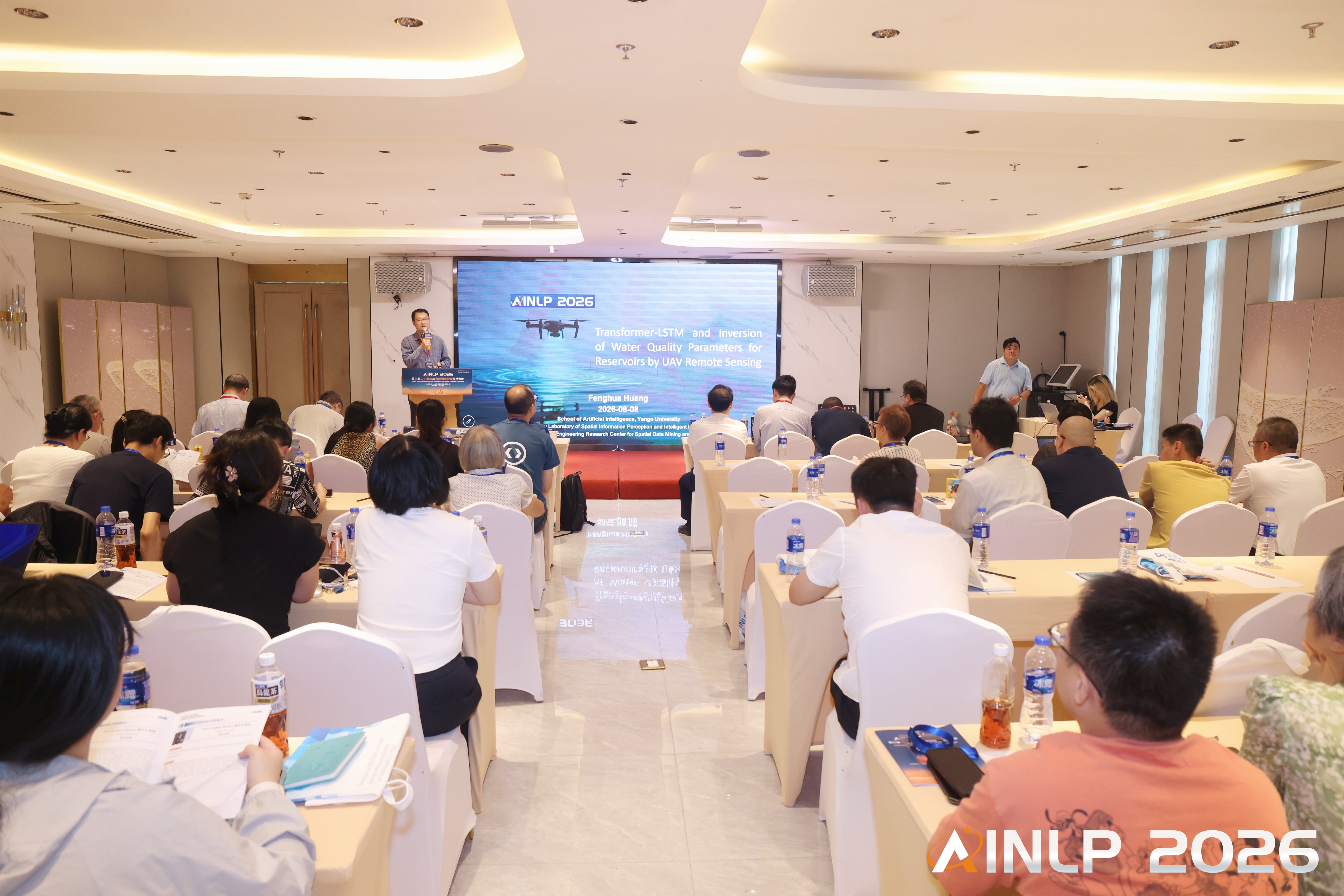
The 2026 3rd Academic Conference on Artificial Intelligence and Natural Language Processing (AINLP 2026) Successfully Concluded in Shanghai
On August 8, 2026, the 2026 3rd Academic Conference on Artificial Intelligence and Natural Language Processing (AINLP 2026) was successfully held and concluded in Shanghai, China. The conference was organized by Shanghai Pudong New Area Association for Computer, with Yango University serving as the supporting institution. Adopting a hybrid format that combined on-site and online participation, the event attracted over a hundred scholars on-site and brought together top experts, researchers, and industry leaders from both academia and industry. Participants engaged in in-depth exchanges and discussions on cutting-edge technologies, innovative applications, and future development trends in the fields of artificial intelligence and natural language processing.

Opening Ceremony
The conference officially commenced at 9:00 a.m., with Nan Wang, Professorate Senior Engineer, HKUST Shanghai Center and Chair of the Academic Committee ofShanghai Pudong New Area Association for Computer, serving as the host. On behalf of the organizers, he delivered the opening address, extending a warm welcome and sincere gratitude to all the experts and scholars present.
 |  |
|
|
Keynote Speeches
During the keynote session, the conference invited several distinguished experts from academia and industry to share their insights.Professor Yang Yang, IEEE Fellow and Professor at the HKUST Shanghai Industry-Education Integration Center, presented a talk titled “NASCA: Network Agentic Service Customization Architecture,” systematically elaborating on his latest research achievements in network intelligent service customization. Professor Zhao Hai, Director of the Institute of General Artificial Intelligence at the School of Computer Science, Shanghai Jiao Tong University, delivered a report entitled “Scaling Law, A Fluke, Not a Path: A Mathematical Theory of AGI and its Brain-inspired LLM Exploration,” offering a profound reexamination of the development path of general artificial intelligence from a mathematical theory perspective.Professor Huang Fenghua, Dean of the School of Artificial Intelligence and Director of the Institute of Intelligent Engineering Technology at Yango University, presented his study “Transformer-LSTM and Inversion of water quality parameters for reservoirs by UAV Remote Sensing,” vividly demonstrating the practical application effectiveness of AI technology in environmental monitoring.Dr. Chen Yunwen, Founder and Chairman of Datagrand Co., Ltd., focused on “Agentic Document Intelligence: Skills, Knowledge and Industrial NLP Applications,” delving into the practical deployment and prospects of natural language processing in industrial scenarios. The presentations by these four experts offered diverse perspectives and substantial content, providing attendees with cutting-edge insights and rich inspiration.
Following the presentations, the conference invited Mr. Yang Guohua (President ofShanghai Pudong New Area Association for Computer), Mr. Xi Liping (Secretary-General), Mr. He Zhifeng (Vice President), and Mr. Li Xiaotong (Vice President) to present certificates of appreciation to the speakers, followed by group photos.
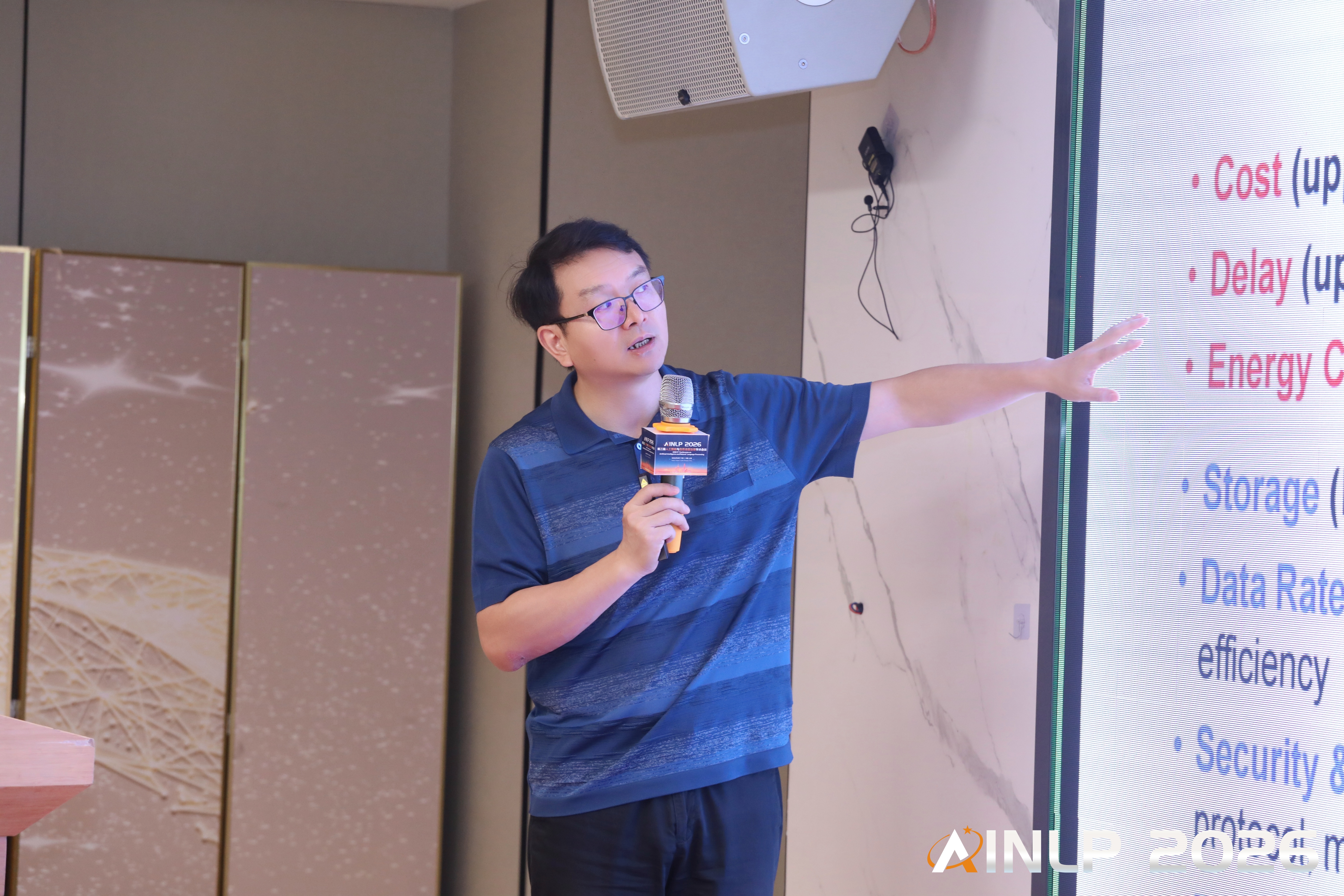 |  |
| Professor Yang Yang |
|
 |  |
| Professor Hai Zhao |
|
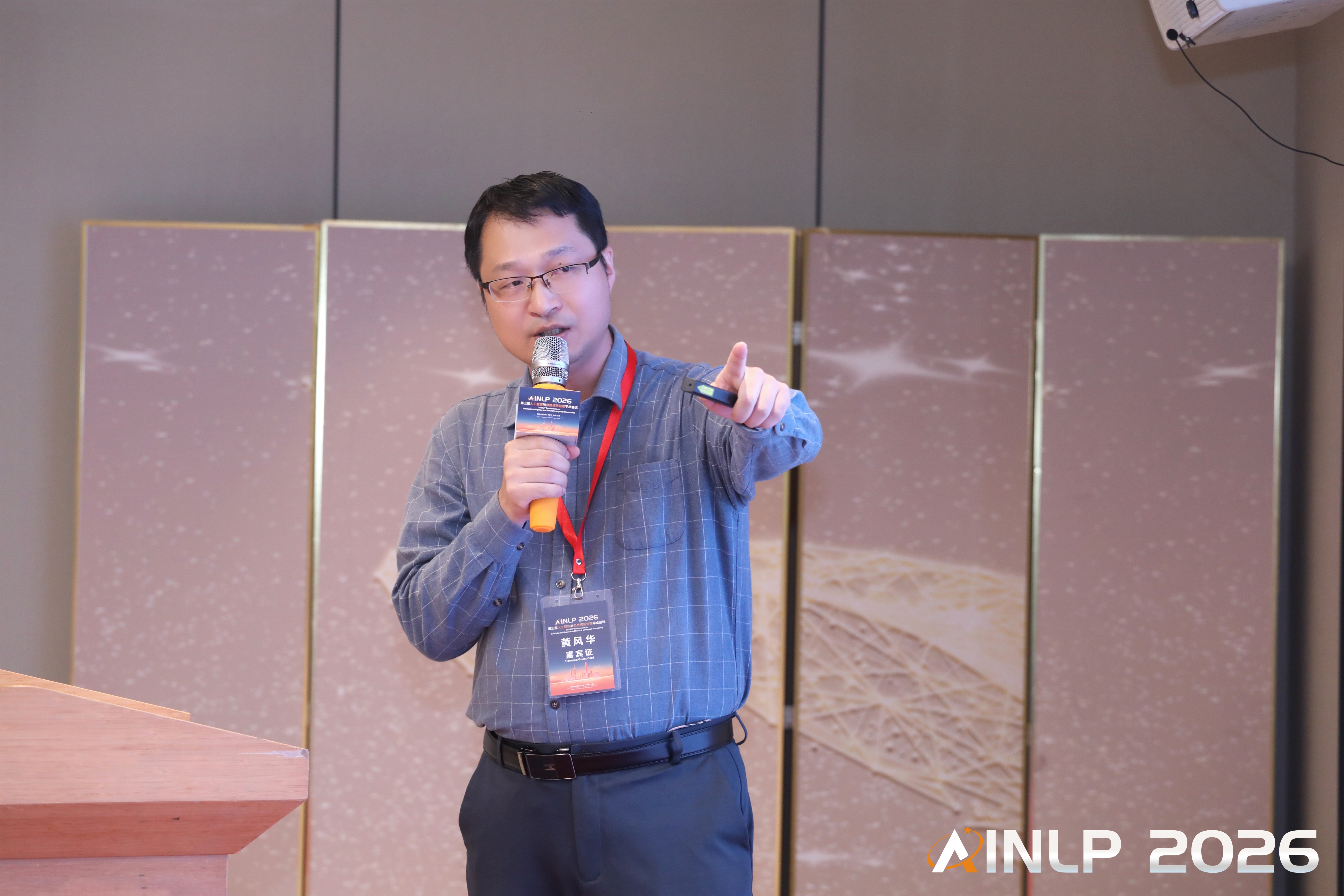 |  |
| Professor Fenghua Huang |
|
 |  |
| Dr. Yunwen Chen |
|
Oral Presentations & Poster Sessions
The afternoon sessions were primarily dedicated to oral presentations and poster displays. Young scholars from multiple universities—including Henan University of Economics and Law, Baoshan University, University of Shanghai for Science and Technology, National University of Defense Technology, Wuchang Shouyi University, Xinjiang University, Changchun University of Technology, and Fuyang Normal University—shared their latest research findings. The topics covered a range of cutting-edge directions, such as natural language processing, deep learning model optimization, knowledge graph construction, intelligent information retrieval, and cross-modal data analysis. The presentations combined theoretical exploration with practical applications, reflecting the young researchers’ acute grasp of current academic hotspots and their solid research capabilities.
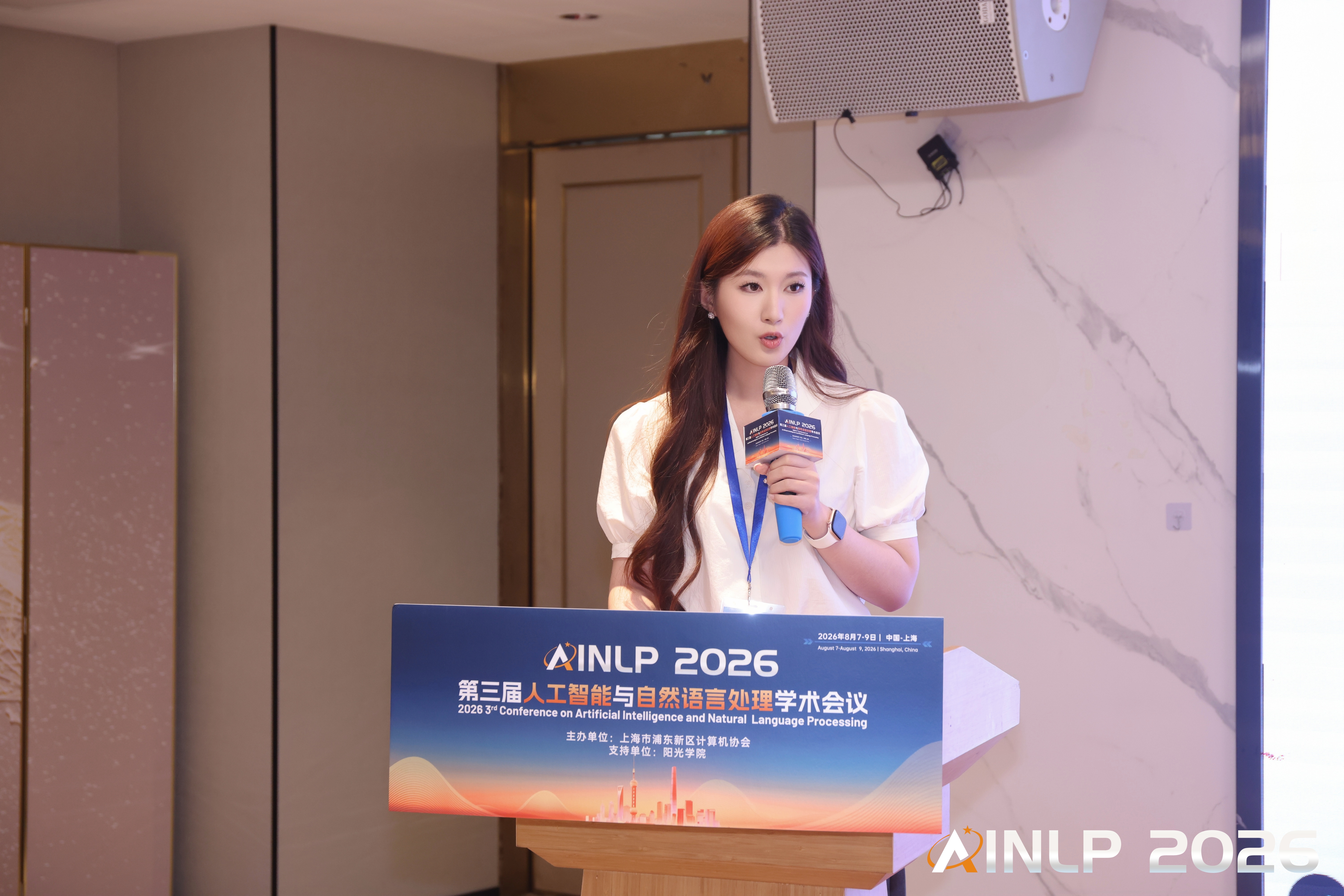 |  |  |
Closing Ceremony
This conference effectively showcased the latest progress in artificial intelligence and natural language processing, built a bridge for dialogue between academia and industry, and generated innovative outcomes and cross-sector collaborative models that will guide future academic exploration and technology transfer. The conference came to a successful close amid warm applause. Its fruitful achievements will continue to energize academic innovation and industrial integration, while also pointing the way for future research directions. Participants looked forward to reuniting next year to discuss the infinite possibilities of the intelligent era.